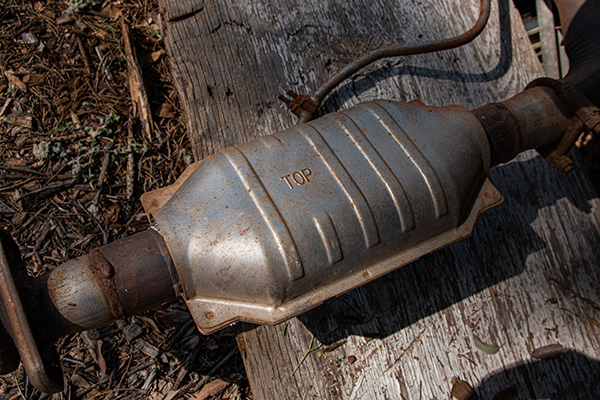
That rotten-egg exhaust smell is hard to ignore. It can drift into the cabin when you park, hang around the back of the car, and make you worry something is about to fail. Some drivers notice it only once in a while, and others notice it every time they drive. Either way, it’s a smell that usually means your emissions system is dealing with something it does not like.
The smell most people describe comes from sulfur compounds in the exhaust. Modern fuel contains small amounts of sulfur, and the catalytic converter is supposed to process those compounds. When the process is not happening correctly, you can get that sharp odor.
Why That Smell Shows Up in the First Place
The catalytic converter converts harmful gases into less harmful ones. When everything is working, sulfur compounds are handled without creating a strong odor. When the converter is overwhelmed, contaminated, or not operating at the right temperature, sulfur smells can become noticeable.
Sometimes it’s not that the converter is bad. Sometimes the engine is sending out exhaust that is too rich, meaning too much fuel is getting burned. That extra fuel can create chemical reactions in the converter that produce the odor. So the smell is often a clue about the engine’s fuel control, not only the exhaust hardware.
The Timing Gives You a Clue
Pay attention to when you notice the smell, because it helps narrow down the cause.
If it happens mostly after cold starts and then fades, the converter may simply be warming up and catching up. If it happens after hard acceleration or climbing hills, the engine may be running rich under load. If it happens constantly, it may point to a converter that is not processing gases correctly or an engine problem that is happening all the time.
If the smell shows up along with a check engine light, that combination is meaningful. It often means the car has stored codes that can point toward the underlying issue.
Common Causes That Create a Rotten Egg Smell
A few problems show up over and over when drivers report this symptom.
One is a failing or contaminated catalytic converter. If the converter’s internal material is damaged or coated, it cannot do its job efficiently. Another is an engine running rich because of a sensor issue or fuel system issue. Too much fuel in the exhaust can overload the converter.
Misfires are another big contributor. When an engine misfires, unburned fuel can enter the exhaust. That can cause odor, and it can also overheat the catalytic converter. Long-term misfires can ruin a converter, so this is one cause you do not want to ignore.
A failing oxygen sensor can also play a role. Oxygen sensors help the engine computer adjust the fuel mixture. If the sensor reads incorrectly, the engine may run rich. That can create odor and reduce fuel economy.
Why Short Trips and Stop-and-Go Can Make It More Noticeable
Short trips can keep the catalytic converter from reaching full operating temperature. The converter works best when it is hot enough to process exhaust gases efficiently. If you drive only a few miles at a time, the converter may not stay in its ideal range long enough.
Stop-and-go traffic can also change exhaust temperature and fuel mixture frequently. That can make certain smells more noticeable, especially if the engine is slightly out of tune. This is why some drivers notice the smell more during city driving than highway cruising.
What Else to Watch For Besides the Smell
A smell alone does not always mean immediate failure, but it often comes with other clues.
You might notice reduced fuel economy, sluggish acceleration, or a rough idle. Some vehicles will show a check engine light for catalyst efficiency or fuel mixture issues. You may also notice a rattling sound from under the car if the converter’s internal substrate is breaking apart.
If the car feels like it is losing power, especially at higher speeds, a restricted catalytic converter becomes a possibility. That restriction can create backpressure in the exhaust, which can affect engine performance.
How the Problem Is Diagnosed Correctly
A proper diagnosis usually starts with scanning for codes and reviewing live data. That helps confirm whether the engine is running rich, misfiring, or seeing sensor readings that do not make sense. It also helps identify whether the converter is underperforming.
From there, testing may include checking oxygen sensor behavior, fuel trim data, misfire counts, and exhaust backpressure if restriction is suspected. The goal is to confirm the cause, because replacing a converter without fixing a rich condition can lead to the same problem returning.
Get Exhaust And Emissions Diagnostics in Portland, CT, with Portland Automotive
We can scan the system for codes, inspect fuel mixture and sensor data, and diagnose whether the rotten-egg smell is coming from a rich-running condition, a misfire, or a catalytic converter issue. We’ll focus on the root cause so the repair actually eliminates the odor and protects your emissions system.
Call Portland Automotive in Portland, CT, to schedule diagnostics and get your exhaust smell resolved.